 ultimate-guide
Sewer Inspection for Home Buyers: What to Know Before Closing
Last Updated: November 14, 2026
Quick Summary
A sewer inspection uses a waterproof camera on a flexible cable to record the inside of the main sewer line from the house to the street or septic tank. A standard home inspection usually does not cover this underground pipe, so buyers often order a separate sewer inspection before closing.
- Standard home inspections normally do not send a camera into the underground sewer line.
- A camera run records the pipe material, joint condition, and distance to each defect.
- Warning signs include gurgling toilets, slow drains, soggy yard patches, and recurring clogs.
- Confirm the contingency deadline, then schedule the sewer scope before that date.
- Request the recorded video and written summary so repair estimates can reference distance readings.
Table of Contents
- What a Sewer Scope Inspection Is and Why It Matters When You Buy
- What a Standard Home Inspection Does and Does Not Cover
- How a Sewer Camera Inspection Is Performed, Step by Step
- Sewer Line Inspection Cost: Pricing Factors and What Affects Your Quote
- When a Sewer Inspection Fails: Repair Responsibility, Negotiation, and Your Options
- Building a Buyer Timeline: Scheduling Your Inspection and Finding a Local Provider Near You
- Booking Your Canton Sewer Camera Inspection Before You Close
- Frequently Asked Questions
What a Sewer Scope Inspection Is and Why It Matters When You Buy
A sewer scope inspection uses a small waterproof camera on a flexible cable to record the inside of the main sewer line that carries waste from your home to the street or septic tank.
The sewer lateral is the private pipe running from the house to the municipal connection, and it is often the buyer's responsibility to maintain. Problems such as root intrusion, cracks, offsets and sagging sections develop slowly and show no signs inside the home until a backup occurs.
What a Standard Home Inspection Does and Does Not Cover
A standard home inspection checks the visible and accessible systems of a house: roof, electrical panel, heating and cooling, plumbing fixtures, and the drainage you can reach from above ground.
If the inspector flags slow drainage, staining, or a suspicious yard area, that is a reason to add a dedicated sewer scope inspection rather than a reason to stop there.
How a Sewer Camera Inspection Is Performed, Step by Step
A typical sewer camera inspection follows a consistent sequence:
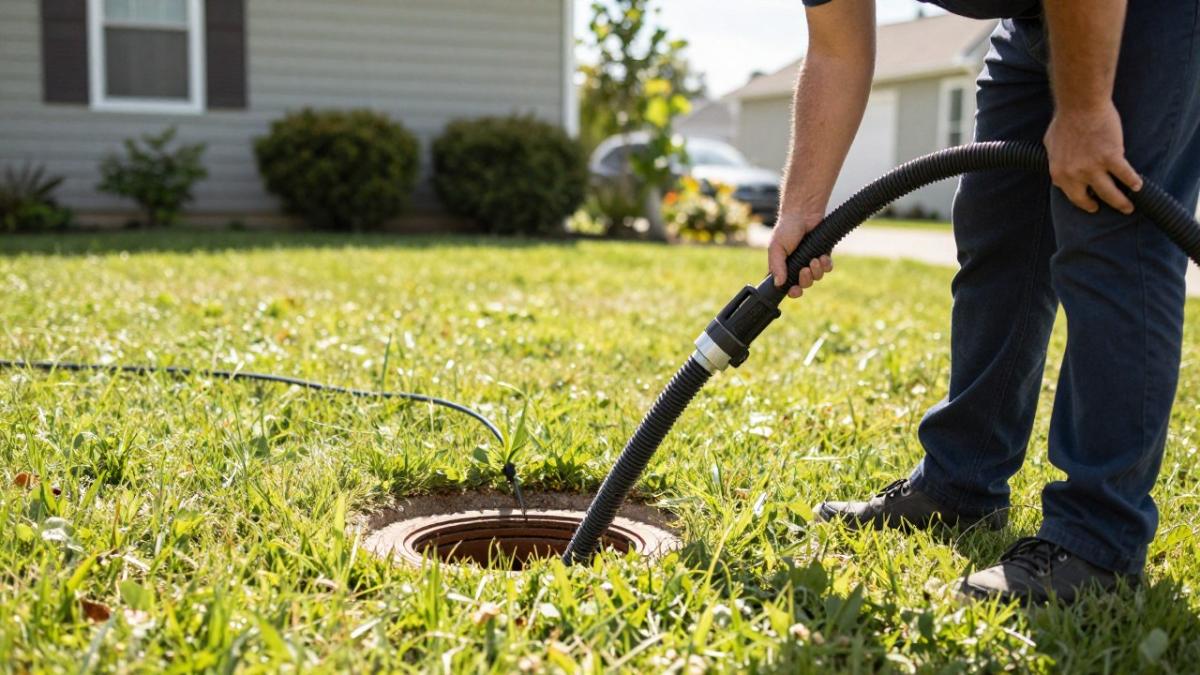
- Access the line. The technician opens the main cleanout, usually at the exterior wall or in the basement, to reach the pipe.
- Clear loose debris if needed. Heavy buildup can block the camera, so a light cleaning may come first.
- Feed the camera. A flexible cable with a high-resolution camera is pushed through the line toward the street connection, typically while the technician watches a monitor.
- Record and mark findings. The video is recorded, and the technician notes the distance from the cleanout to each defect, such as a crack, root mass or offset.
- Review the footage with you. A good inspection includes walking through the recording so you can see exactly what was found.
What the Camera Footage Typically Shows
The footage usually reveals the pipe material and diameter, the condition of joints, and any intrusions. Clay pipe commonly shows root intrusion at joints, while cast iron may show corrosion and scale. Cracks, collapsed sections, bellies where the pipe sags, and offsets where sections no longer line up all appear clearly on video. Ask the technician to point out the distance readings, because those figures tell a repair crew where to dig.
Warning Signs and Common Sewer Line Problems
Several signs suggest a sewer line may need a closer look before you buy:
- Gurgling toilets or drains that empty slowly
- Soggy or unusually green patches in the yard above the line
- Sewage odor around floor drains or the basement
- Recurring clogs that cleaning does not permanently fix
- Visible tree roots near the line or a large mature tree close to the pipe path
Tree roots are one of the most common problems we find in older Canton-area homes, since roots seek the moisture inside aging pipe joints. You can use our guide to signs of tree root damage in your sewer line to check for these symptoms before calling a pro.
The steps of a sewer camera inspection and what each one produces are summarised below.
| Step | What happens | Output |
|---|---|---|
| Access the line | Technician opens the main cleanout at the exterior wall or basement | Access to the pipe |
| Clear loose debris | Light cleaning if heavy buildup blocks the camera | Clear path for the camera |
| Feed the camera | Flexible cable with high-resolution camera pushed toward the street connection | Live view on a monitor |
| Record and mark findings | Video recorded and distance to each defect noted | Recording with distance readings |
| Review with you | Footage walked through with the buyer | Clear understanding of findings |
Sewer Line Inspection Cost: Pricing Factors and What Affects Your Quote
Pricing for a sewer camera inspection depends on the specifics of the property, so treat any quote as property-specific and ask what is included before you compare it to another. Our guide to local pricing factors and the questions to ask before hiring can help you compare quotes fairly.
The factors that move a quote up or down are consistent from job to job:
- Line length and run to the connection. A short lateral to a municipal main in a Canton neighborhood is a different job than a long rural run to a septic tank or a distant county connection.
- Cleanout access. An exposed cleanout at the exterior wall or in the basement is quick to open. A buried or missing cleanout may require locating and excavating, which adds labor.
- Condition of the pipe. Heavy grease, scale, or roots can stop the camera, so a light cleaning or cabling may be needed first. That cleaning is usually a separate line item.
- Line locating. If you need the pipe path marked in the yard for a repair estimate or a future dig, locating is often priced separately from the camera run.
- Deliverables. A recorded video and a written summary with distance readings are what you will use in negotiations. Confirm they are included rather than an add-on.
Watch out: a quote that is dramatically lower than the others often excludes the video file or the written report, which leaves you with nothing to hand to a seller or a repair contractor.
Keep inspection fees separate from repair estimates in your head and in your negotiations. The inspection fee and any repair estimate are separate costs, and a licensed contractor should put a repair estimate in writing after reviewing the footage.
When a Sewer Inspection Fails: Repair Responsibility, Negotiation, and Your Options
A failed inspection does not automatically kill a deal. It gives you information to negotiate with. Common options include asking the seller to make repairs before closing, requesting a credit or price reduction to cover the work, or asking for an escrow holdback while repairs are completed.
Responsibility usually depends on where the damage sits. The line between the public sewer and the private lateral varies by municipality, and in many cases the homeowner is responsible for the private portion up to the street connection.
Building a Buyer Timeline: Scheduling Your Inspection and Finding a Local Provider Near You
Purchase contracts often give you a defined inspection contingency period, and the sewer scope has to fit inside it along with the general home inspection, your review of the video, and any repair estimates. A workable sequence for a Canton or Stark County purchase looks like this:
- Day 1-2: Read the contingency dates. Confirm the inspection deadline and any separate deadline for requesting repairs or credits. Put both on your calendar before you schedule anything.
- Day 2-3: Order the general home inspection and the sewer scope together. Booking them back-to-back saves days. Tell the sewer provider you are a buyer under contract and give them the closing date.
- Day 3-5: Confirm access. The seller or listing agent usually has to provide access to the cleanout, the basement, and the yard. Confirm who will be there and whether the cleanout is exposed.
- Inspection day: watch the monitor. Ask the technician to call out distance readings at each defect so you can connect the footage to a location in the yard.
- Within 24-48 hours: get the video and written summary. Review them the same day. If the findings are significant, send the footage to a licensed repair contractor for a written estimate.
- Before the contingency deadline: submit your request. Ask for a repair, a credit, a price reduction, or an escrow holdback in writing, and keep a copy of the video and report with your request.
- Before closing: verify any agreed repairs. If the seller makes repairs, ask for the invoice and, where practical, a short re-scope of the repaired section.
Watch out: a common failure is ordering the sewer scope after the general inspection report comes back, which can push the camera run past the contingency deadline and leave you without negotiating leverage.
When you choose a provider, ask how quickly they can schedule, whether they serve your specific neighborhood, and whether the quote includes the recorded video and written summary.
Booking Your Canton Sewer Camera Inspection Before You Close
Do not wait until the final walkthrough to find out what is underground. Affordable Drain provides camera inspections across Canton and Stark County, and offers hydro jetting, camera inspections, and line locating as part of its drain and sewer services. Contact Affordable Drain on our website to schedule your inspection before your contingency deadline.
Affordable Drain | Family-owned and operated since 1999 | Serving Canton, Ohio and Stark County
Frequently Asked Questions
What is included in a sewer inspection?
A sewer scope inspection typically includes feeding a waterproof camera through a cleanout or accessible pipe opening to record the main sewer line and, where possible, the lateral from the house to the public connection. Inspectors look for cracks, root intrusion, offsets, sagging sections, corrosion, and blockages. The inspection does not usually cover interior plumbing fixtures, and access limits what can be seen, so ask the provider to note any sections that could not be reached.
What does a sewer camera inspection show?
A sewer camera inspection shows the condition of the inside of the pipe as the camera travels through it. Common findings include tree root intrusion, cracked or broken pipe, collapsed sections, pipe offsets, sagging low spots that hold water, heavy scale or corrosion, and grease or debris buildup. The footage also helps identify pipe material and approximate depth, which matter when estimating repair scope. Reviewing the recording with the inspector helps you understand exactly where each issue sits.
How much does a sewer line inspection cost?
Sewer line inspection pricing depends on the length of the line, access to the cleanout, the complexity of the run, and whether a written report or video file is included. Because rates vary by job, Affordable Drain recommends requesting a quote for your property rather than relying on general estimates. Ask whether the fee covers a line locate if the connection is hard to find, and whether the inspection can be scheduled before your inspection contingency deadline.
Is a sewer scope inspection worth it when buying a house?
For many buyers, a sewer scope inspection is worth the added step because standard home inspections do not usually evaluate the underground sewer lateral. Problems such as root intrusion, broken pipe, or collapsed sections can lead to backups and water damage. Older homes, homes with large trees near the line, and properties with a history of clogs deserve particular attention. The inspection gives you documented evidence to use in repair negotiations.
What happens if a sewer inspection fails?
A failed sewer inspection means the camera found damage that affects function, such as major cracks, root blockages, or collapsed sections. You generally have several options: request that the seller repair the line before closing, negotiate a price reduction, ask for a credit at closing, or walk away if your inspection contingency allows it. Get a repair estimate from a licensed contractor before deciding, and confirm with your local municipality which party is responsible for the private portion of the line.
How long does a sewer scope inspection take?
The full visit length can vary depending on the cleanout location, any debris that must be cleared, and the footage review. Scheduling is often the longer step, so book early in your purchase timeline. Schedule the inspection within your contingency window so there is time to negotiate repairs or request a second look if the results are unclear.
Who pays for a sewer inspection when buying a house?
In most transactions, the buyer orders and pays for a sewer scope inspection, usually as part of due diligence. Some buyers ask the seller to cover the cost as part of negotiations, but this is not standard everywhere. Clarify the arrangement with your real estate agent early so the inspection is scheduled within your contingency period. Keep the invoice and any written report for your records.