 how-to
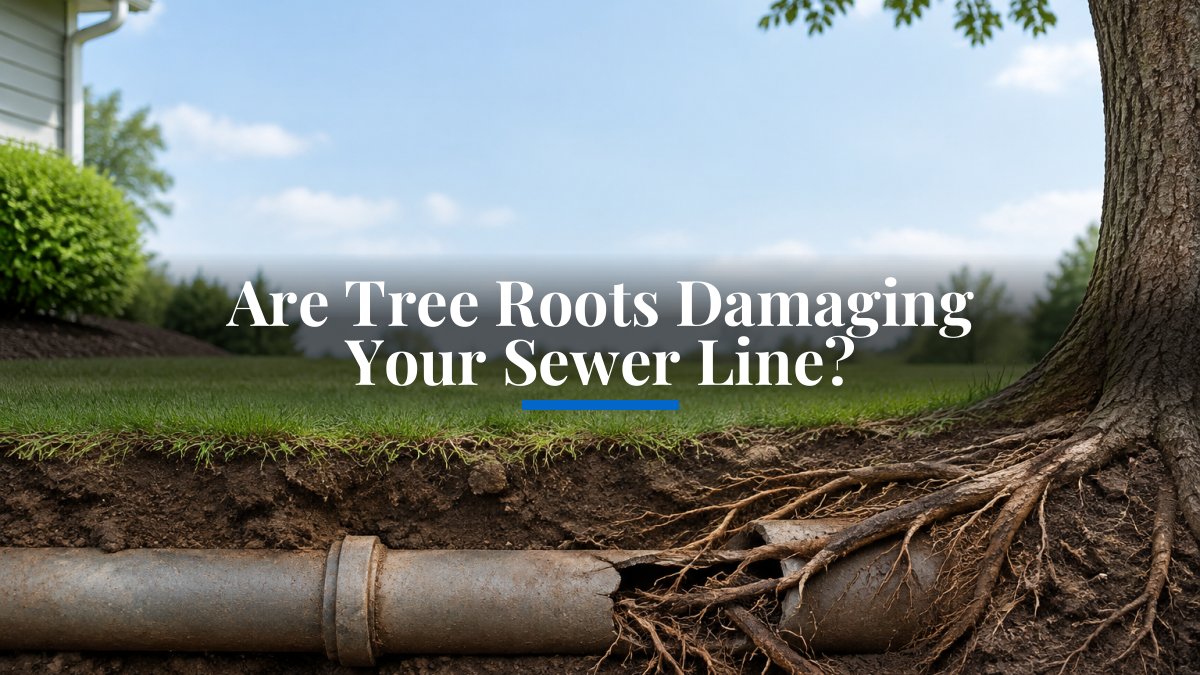
Are Tree Roots Damaging Your Sewer Line?
Last Updated: November 5, 2026
Quick Summary
Tree root intrusion happens when roots grow into cracked or loose sewer joints seeking water, causing a blockage that keeps building. Warning signs include several slow drains at once, recurring clogs, gurgling toilets, sewer odors, and soft or unusually green patches of lawn above the pipe path.
- Slow drains in several fixtures at the same time usually point to the main sewer line.
- Clogs that return within weeks after cleaning may come from a root mass in the line.
- Sewage backing up through a toilet or floor drain calls for stopping water use and calling a professional.
- A camera inspection is the most reliable way to confirm root intrusion and locate the damage.
- Chemical root killers rarely remove established root masses and can damage older pipes.
Table of Contents
- Why Tree Roots Find Their Way Into Sewer Lines
- Slow Drains and Recurring Clogs Across Multiple Fixtures
- Gurgling Toilets, Bubbling Drains, and Sewer Odors
- Yard Clues: Soft Ground, Wet Spots, and Lush Green Patches
- Signs of Tree Root Intrusion Pictures: What to Look For Visually
- How to Inspect a Sewer Line for Tree Roots
- Roots in Pipes: Removal Options, Costs, and What Affects Them
- What Dissolves Tree Roots in Sewer Lines (and What Doesn't Work)
- Frequently Asked Questions
Why Tree Roots Find Their Way Into Sewer Lines
Tree roots are one of the most common causes of sewer line damage in Canton, and the signs are often hidden underground for months. At Affordable Drain, our family-owned team has worked on drain and sewer lines across Canton and Stark County for more than 25 years. This guide explains how to spot the signs of tree root intrusion early, what to check yourself, and when to call a professional.
Roots do not attack pipes on purpose. For guidance on what to do about root intrusion in the fall, see fall tree root intrusion guidance. They grow toward water, and sewer lines carry a steady supply of it. Even a small crack or a loose joint can be enough to draw roots inside.
Once a root finds its way in, it grows quickly. Within the pipe, it catches toilet paper and debris, and the blockage keeps building.
Older clay and cast-iron lines are especially vulnerable. Their joints loosen over time, which gives roots an easy entry point. Newer plastic pipes are less prone to cracking, but they still leak at the joints where roots can enter.
Slow Drains and Recurring Clogs Across Multiple Fixtures
One of the clearest signs of tree root intrusion is slow draining in more than one place at once. A single slow sink often points to a local clog in the fixture. When the tub, shower, and kitchen sink all drain slowly at the same time, the problem is usually further down the main line.
Watch for these patterns:
- Several drains slowing down at the same time
- Clogs that return within weeks after cleaning
- Floor drains that back up during heavy use
- Water pooling in the tub after a shower
- Toilets that drain slowly even after plunging
Recurring clogs are a strong warning sign. If you have cleared a drain more than once in a year and the blockage keeps coming back, the cause may be a root mass in the line rather than a simple buildup.
Gurgling Toilets, Bubbling Drains, and Sewer Odors
Gurgling sounds are another common symptom. When you flush a toilet and hear bubbling from a tub or floor drain, air is struggling to move through a partial blockage in the sewer line. This is a warning that the flow is restricted.
Sewer odors are also a red flag. A smell of rotten eggs or sewage near floor drains or fixtures can mean the line is damaged or partly blocked. Water in a toilet bowl that rises after a flush is another sign that the main line cannot handle the load.
Toilet backups deserve immediate attention. If sewage comes up through a toilet or floor drain, stop using water in the house and call a professional. Sewage backups can cause serious water damage and health risks.
Yard Clues: Soft Ground, Wet Spots, and Lush Green Patches
Your yard can show signs of trouble too. Roots that leak into the soil around a damaged line can make the ground feel soft or spongy. Wet spots that stay soggy even after dry weather may point to a leaking pipe underground.
Unusually green or lush grass above a sewer line is another clue. Leaking sewage acts like fertilizer, so the grass directly over the line may grow faster and look greener than the rest of your lawn.
Check these areas after a dry week:
- Soft or sunken ground along the path of your sewer line
- Standing water in one spot with no obvious cause
- Patches of grass that grow much faster or darker than the rest
- Sewage smells outdoors near the cleanout or drain path
These yard clues are easy to miss, but they often appear alongside indoor symptoms.
Signs of Tree Root Intrusion Pictures: What to Look For Visually
Knowing what to look for helps you spot problems faster, but the more useful skill is knowing which visual patterns actually point to roots and which point to something else. Many homeowners find it useful to compare what they see in the yard and around the house with known patterns, then use those patterns to decide how urgently to act.
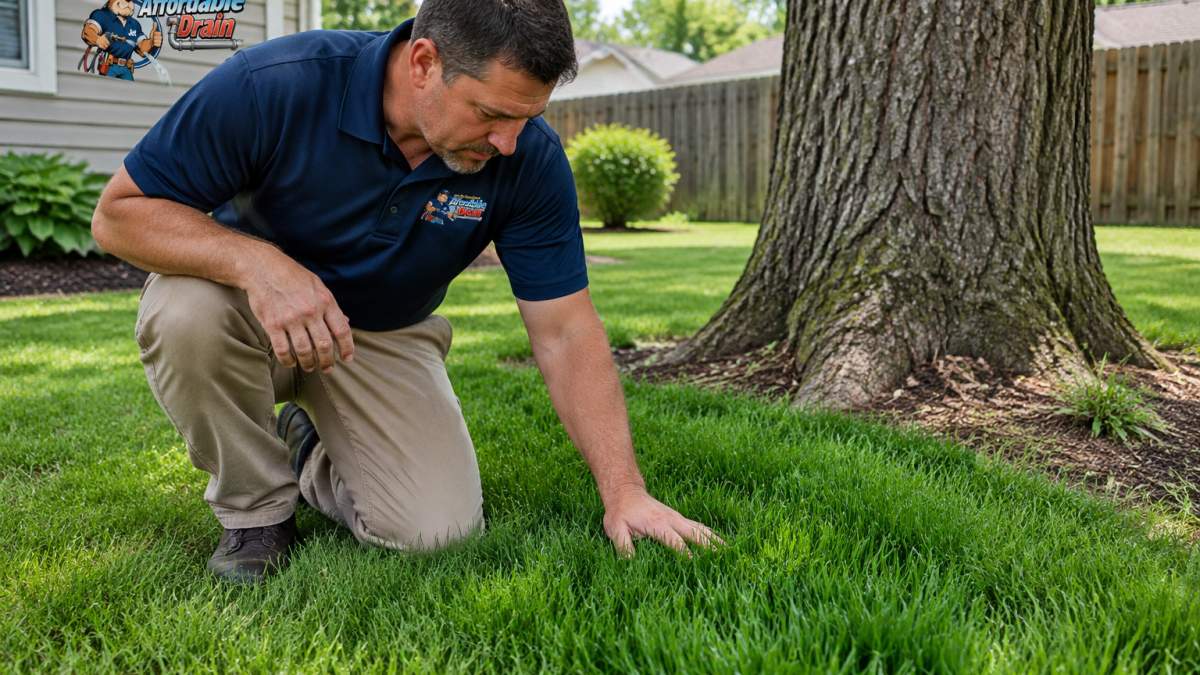
Look for these visual signs, and note what each one usually means:
- Lush, dark green grass in a straight line across the lawn. This is the classic root-intrusion pattern because a leaking sewer line feeds the soil directly above it. A straight green strip that follows the pipe path is more suspicious than a random green patch, which is often just a fertilizer spill or a shallow root zone. To learn how to recognize these yard clues and when to call a professional, read signs of sewer line damage.
- Soft depressions or sinking soil above the pipe path. Soil that has been washed into a cracked pipe or saturated by a leak loses support and settles. A depression that follows a line across the yard is a stronger signal than a single low spot near a downspout.
- Cleanout caps that are cracked or stained with moisture. The cleanout is your access point to the main line, and moisture or staining there can mean the line is backing up or leaking near the house.
- Staining or moisture on basement floor drains. This often appears with indoor symptoms and can indicate that the main line is surcharging rather than flowing freely.
- Tree roots visible near the surface close to the sewer line. Surface roots alone are not proof of intrusion, but they confirm that a tree has roots in the same soil zone as the pipe.
Photos can help you track changes over time. Take a picture of the yard each season so you can compare patterns. If you see a new green strip or soft spot, note its location and share it with your technician. A dated photo log is also useful because root intrusion often develops slowly, and a change that looks minor week to week can be obvious across a season.
Watch out: a single green patch or one soft spot is not proof of root intrusion. Grease, wipes, a collapsed pipe, or a broken irrigation line can produce similar yard clues, so treat the visual signs as a reason to inspect, not a diagnosis.
Use the visual clues together with the indoor symptoms to triage the situation. A straight green strip plus slow drains across multiple fixtures points toward the main line. A soft spot with no indoor symptoms may be a smaller leak or a different cause.
How to Inspect a Sewer Line for Tree Roots
A camera inspection is the most reliable way to confirm root intrusion. A technician feeds a small camera through the sewer line and records what is inside. The footage shows root masses, cracks, offset joints, and debris. It also shows where the damage is located, so repairs can be planned.
Before you call, you can do a few simple checks:
- Note which drains are slow and when the problems started
- Record any gurgling, odors, or wet spots
- Check the cleanout location and make sure it is accessible
- Write down any recurring clogs and how often they return
Affordable Drain uses camera inspections and line locating to find damage and to identify where sewer or downspout lines run in the yard.
For a clear view of your line and its condition, contact Affordable Drain to schedule a camera inspection.
Roots in Pipes: Removal Options, Costs, and What Affects Them
Once roots are confirmed, the right approach depends on where the roots are, how much of the pipe they have filled, and whether the pipe itself is still sound.
Mechanical clearing. Hydro jetting uses high-pressure water to cut through root masses and flush the line clean, and a root cutter or auger can open a path through a heavy blockage.
Spot repair. If the camera shows a single cracked section, an offset joint, or a short length of collapsed pipe, a spot repair replaces that section rather than the whole line.
Full line replacement. When the pipe is badly cracked, collapsed, or root-bound along most of its length, replacement is the durable option.
Several factors affect cost, including the length and depth of the line, the condition of the pipe, how far the roots have spread, and whether the line needs repair or replacement. You can review local sewer cleaning services cost factors to understand pricing models before requesting a quote.
Ongoing maintenance helps prevent repeat problems. Regular hydro jetting and camera checks can catch new root growth before it causes a full blockage, and a maintenance interval set after an inspection is usually more effective than waiting for the next backup.
Watch out: choosing clearing alone when the camera shows a cracked or offset pipe can lead to a repeat blockage within a season.
Professional hydro jetting services are a strong option for clearing roots and restoring flow. Affordable Drain can discuss whether it fits your situation during an inspection.
The article outlines the main paths for handling confirmed roots, each with its own trade-off.
| Option | Best for | Key difference |
|---|---|---|
| Mechanical clearing | Active root blockages | Restores flow quickly but does not fix the entry point |
| Spot repair | Single cracked or offset section | Less disruptive and cheaper than full replacement |
| Full line replacement | Badly cracked or root-bound lines | Durable fix that addresses the cause, but most disruptive and costly |
What Dissolves Tree Roots in Sewer Lines (and What Doesn't Work)
Many homeowners try chemical root killers from the hardware store first. These products can slow root growth for a short time, but they rarely remove established root masses. Some chemicals can also damage older pipes and harm the surrounding soil.
Drain cleaners and home remedies generally do not clear root blockages either.
Mechanical removal is often the more reliable approach. Hydro jetting or cutting removes roots physically, and a camera inspection can confirm that the line is clear. Your best option depends on the pipe material, the root growth, and the condition of the line.
If you have tried home fixes and the problem keeps coming back, a professional inspection is the next step. Affordable Drain can inspect the line and discuss options for your home.
Frequently Asked Questions
Does homeowners insurance cover damage caused by tree roots?
It depends on the policy and how the damage happened. Many standard homeowners policies cover sudden water damage from a burst or accidental discharge, but they often exclude gradual damage, wear, and deterioration, and some specifically exclude damage to the sewer line itself. Coverage for the pipe repair is frequently separate from coverage for water damage inside the home. Review your policy, ask your agent how sewer and drain backups are handled, and keep inspection reports and repair invoices. A camera inspection that documents root intrusion can help you understand what your policy addresses before you file a claim.
How can I tell if tree roots are blocking my sewer line?
Look for a pattern rather than a single symptom. Slow drains in more than one fixture, gurgling toilets, sewer odors, and recurring clogs that return within weeks or months are common signs. Soft or wet ground over the sewer path and unusually green grass can point to a leak. Because other problems can produce similar symptoms, a sewer camera inspection is the most reliable way to confirm whether roots have entered the line and how severe the intrusion is.
What dissolves tree roots in sewer lines?
Chemical root killers, often containing copper sulfate or similar compounds, can slow regrowth, but they do not physically remove roots and can harm plumbing, septic systems, and the surrounding environment when used repeatedly. Mechanical removal with hydro jetting or cutting is usually needed first, followed by a follow-up inspection. Pipe repair or replacement addresses the root entry points themselves. Ask any provider to explain what they plan to use and why before work begins.