 how-to
How to Clear a Drain Without Chemical Cleaners
Last Updated: November 10, 2026
Quick Summary
Safer alternatives to chemical drain cleaners include a plunger or drain snake for hair and soap clogs, a baking soda and vinegar treatment for light buildup, and enzyme products for routine upkeep. If several fixtures back up at once, the blockage is likely in the main line and should be handled by a professional instead of a household method.
- Use a plunger first for a single fixture that drains slowly.
- Follow the baking soda and vinegar method with hot, not boiling, water.
- Never combine vinegar or a second cleaner with a chemical drain product already in the pipe.
- Stop home methods if the drain stays slow after two attempts.
- Several fixtures backing up at once signals a main-line problem needing a professional.
Table of Contents
- Why Homeowners Are Moving Away From Chemical Drain Cleaners
- Matching the Method to the Clog: A Decision Guide by Type and Location
- How to Unclog a Drain Naturally With Baking Soda, Vinegar and Hot Water
- Plungers and Drain Snakes: Mechanical Removal Done Right
- Enzyme Drain Cleaner Benefits and Their Limits
- When Hydro Jetting Services in Canton, OH Are the Better Option
- Booking a Drain Inspection With Affordable Drain
- Frequently Asked Questions
Why Homeowners Are Moving Away From Chemical Drain Cleaners
Alternatives to chemical drain cleaners are worth knowing about before you reach for the bottle under the sink. At Affordable Drain, a family-owned business serving Canton and Stark County since 1999, we know how harsh chemicals can affect drains and pipes. A simple household method may clear a slow drain, with less risk to pipes and hands than harsh chemicals. For tougher blockages that natural methods cannot clear, our step-by-step guide to clearing deep sewer clogs explains the right tools and when to stop and call a professional for main line problems.
Chemical drain cleaners work by generating heat or using strong caustic ingredients to dissolve hair, grease and soap. That same strength can weaken older pipes and cause problems in PVC joints over time. They also tend to fail on deeper clogs, which leaves the drain half-cleared and the chemicals sitting in standing water.
Safety is the other concern. Splashes can burn skin and eyes, and mixing one cleaner with another product can release harmful fumes (the CDC). Some homeowners now start with gentler methods before considering stronger options.
Matching the Method to the Clog: A Decision Guide by Type and Location
Most drain-cleaning advice fails because it skips the first question: what kind of clog is this, and where is it? If a drain keeps backing up, learn the causes of recurring clogs and how to stop the cycle before trying another fix. A hair clog in a bathroom sink and a grease clog in a kitchen line respond to different first steps, and a main-line blockage should not be treated with any household method at all.
Step 1: Is it one fixture or several? If a single sink, tub, or shower drains slowly while everything else runs fine, the clog is local and a household method has a reasonable chance. If two or more fixtures back up at the same time, or water gurgles in a floor drain when you run the washer, the blockage is likely in the main line. Stop there.
Step 2: What does the debris look like? Pull the stopper or lift the strainer and look. Soap scum and hair near the opening point to a bathroom fixture clog. Dark grease and food particles point to the kitchen. Grit, sand, or a sulfur smell can indicate a deeper line issue that needs a camera inspection rather than a DIY attempt.
Step 3: What is the pipe made of? This determines which methods are safe. Older homes in Canton and Stark County often have a mix of materials, cast iron, galvanized steel, copper, and PVC, and some have lead or clay sections in the yard line. Boiling water can be risky for some pipe materials, so check what your pipes are made of before using it. A drain snake can scratch the inside of soft pipe if forced. When you do not know the material, choose the gentlest method first.
Step 4: Has a chemical cleaner already been used? If so, do not add vinegar, boiling water, or a second cleaner. Caustic and acidic products can react, and the mixture can splash or release fumes. Flush with cool water only, ventilate the room, and tell any plumber what product was used and when.
Here is how the common clog types map to a first step:
| Clog Type | Likely Location | Best First Method | When to Stop DIY |
|---|---|---|---|
| Hair and soap scum | Bathroom sink, tub, shower | Plunger, then a drain snake | Water still stands after two attempts |
| Grease and food debris | Kitchen sink | Hot (not boiling) water and dish soap, then baking soda and vinegar | Drain stays slow after one treatment cycle |
| Mineral or soap residue | Showerhead, older metal drain | Vinegar soak on removable parts; enzyme product for routine upkeep | Recurring slowdown within weeks |
| Multiple fixtures slow | Main line or sewer | Stop DIY; call a professional | Immediately |
| Gurgling floor drain | Main line or vent | Stop DIY; call a professional | Immediately |
A common pattern among homeowners is to try three or four methods in one afternoon, which adds water to a clogged line and can leave a fixture overflowing. Pick one method, give it the full treatment time, and if the drain is no better, stop and book an inspection. That is cheaper than repairing a pipe damaged by repeated attempts.
How to Unclog a Drain Naturally With Baking Soda, Vinegar and Hot Water
The baking soda and vinegar method is the most repeated alternative to chemical drain cleaners, and it does help with light buildup, but it is not a drain-clearing cure. Understanding why it works, and where it stops working, saves homeowners from repeating it five times on a clog it was never going to clear.
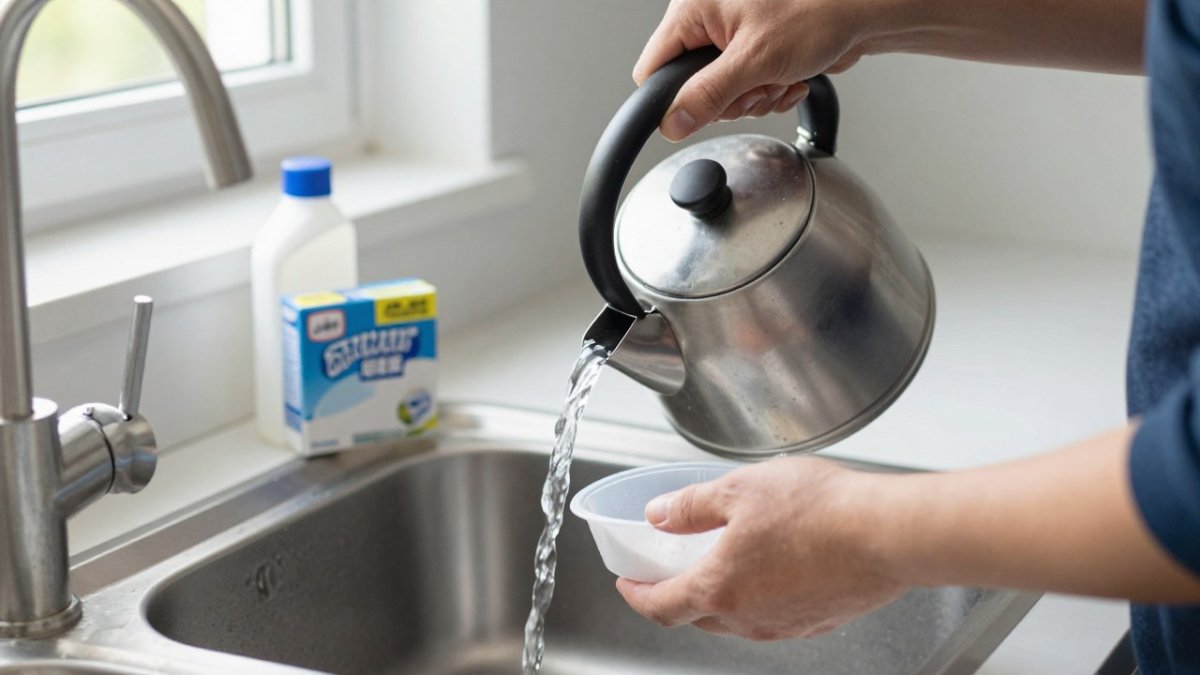
Why it fizzes. Baking soda is sodium bicarbonate, a mild base. White vinegar is dilute acetic acid. When they meet, they react and release carbon dioxide gas, the foaming you see. The agitation can lift soft soap scum and loose debris from the pipe wall, and the slightly basic and acidic residue can help break down greasy film. What the reaction cannot do is dissolve a solid hair mass, a grease plug, or a root intrusion. Those need mechanical removal or professional equipment.
The method, step by step:
- Remove standing water with a cup or sponge so the ingredients reach the clog rather than diluting in the basin.
- Pour about half a cup of baking soda directly into the drain opening.
- Add about half a cup of white vinegar. Expect foaming.
- Cover the drain with a stopper or a damp cloth for 15 to 30 minutes. The cover keeps the gas in contact with the buildup instead of escaping up the sink.
- Flush with a pot of hot, not boiling, water. Hot tap water is the safer choice for PVC; reserve boiling water for metal pipes in good condition.
- If the drain is still slow, repeat once. If it is still slow after two cycles, stop and move to a plunger or snake.
Watch out: Never combine baking soda and vinegar with a commercial chemical drain cleaner already in the pipe. The reaction can be violent, and caustic cleaners plus acid can produce heat and splashing. If a chemical product was used, flush with cool water, ventilate, and wait before trying anything else.
Dish soap and hot water follow-up. A squirt of grease-cutting dish soap followed by a few minutes of hot water is a reasonable first step for a kitchen drain that is slowing from cooking grease. It works on film, not on a plug. Salt is sometimes added as a mild abrasive, but it does little beyond what the baking soda and vinegar cycle already does, and it should not be used on older metal fittings where grit can accelerate wear.
Realistic expectations. These methods are best for maintenance and for clogs you can almost see, hair at the stopper, grease film in the trap. They are poor choices for a fully blocked drain, a clog deeper than the trap, or a recurring backup. If the same drain slows again within a few weeks, the cause is likely deeper in the line and a camera inspection is the next step, not another box of baking soda.
Plungers and Drain Snakes: Mechanical Removal Done Right
A plunger is the most reliable simple tool for many clogs. Cover the overflow hole in a sink, seal the plunger over the drain, and push and pull firmly several times before lifting away.
A drain snake reaches deeper than a plunger can. Feed it slowly into the drain, turn the handle to catch the clog, and pull it back out gradually. Wipe the snake clean after each use.
Mechanical tools are safe for most pipe materials when used gently. Force and sharp motions can scratch or crack pipes, so work slowly.
Enzyme Drain Cleaner Benefits and Their Limits
Enzyme drain cleaners use bacteria or enzymes to break down organic matter over time. Many people find them a gentler option for routine upkeep, and they generally do not produce the heat or fumes of harsh chemicals.
They have limits, though. Enzyme products work slowly, often overnight, and they struggle with hard blockages or standing water. Read the label carefully, and never mix enzyme cleaners with chlorine bleach or other chemical products.
When Hydro Jetting Services in Canton, OH Are the Better Option
Some clogs call for professional equipment. Hydro jetting uses a high-pressure stream of water to scour the inside of the pipe and clear buildup that home methods cannot reach. It is often the right choice for recurring sewer line problems and heavy grease or root intrusion.
Affordable Drain offers hydro jetting in Canton and throughout Stark County, using camera inspections to find the cause before cleaning. Before booking, you can check whether hydro jetting is safe for your pipes. For current pricing or a quote, please contact us or visit our website.
If you have tried home methods and the drain keeps backing up, that is a sign to get a professional look at it.
Booking a Drain Inspection With Affordable Drain
When a clog keeps returning, a camera inspection shows exactly what is happening inside the line. At Affordable Drain, we use inspections to diagnose the problem before recommending work. For ongoing care of your property, see our guide to commercial drain maintenance services in Canton. Our team can also locate sewer or downspout lines in the yard.
If you are ready to move past chemical cleaners and home fixes, book a drain inspection with Affordable Drain to find out what is slowing your drains. Our Canton team is ready to help you restore flow and prevent the next backup.
Frequently Asked Questions
Are chemical drain cleaners safe for old pipes in Canton homes?
Older pipes, including cast iron and aging galvanized steel, can be more vulnerable to harsh chemicals than newer PVC. Strong caustic or acidic cleaners can corrode fittings, weaken joints and splash onto skin or eyes during use. Read the manufacturer's label before using any product, and avoid mixing different cleaners. If your home has older plumbing or you have already used a chemical cleaner that did not work, a licensed plumber can inspect the pipes before you try another method.
What is the best natural way to unclog a sink drain?
For light clogs caused by soap scum, grease or food particles, start by removing any visible debris and running hot water for about 30 seconds. Then pour half a cup of baking soda followed by half a cup of white vinegar, cover the drain for 10 to 15 minutes, and flush with hot water. This works best on minor blockages. Hair clogs usually respond better to a drain snake or a plunger than to baking soda and vinegar alone.
When should I call a professional drain cleaning service in Canton, OH?
Call a professional if more than one fixture drains slowly, if water backs up into a tub or floor drain when you run another fixture, or if you notice gurgling sounds, sewage odors or water pooling in the yard. Repeated clogs within a few months also point to a problem in the main line rather than a local blockage. Affordable Drain can use camera inspections and line locating to find the cause. For current pricing or a quote, contact Affordable Drain directly through its website.
How does hydro jetting compare to chemical cleaners for sewer lines?
Hydro jetting uses high-pressure water to scour grease, roots and buildup from the pipe walls, and it can clear blockages that chemicals cannot dissolve. Chemical cleaners only soften certain organic material and rarely clear root intrusion or collapsed sections. Hydro jetting is a professional service and is generally a better choice for recurring main-line clogs, though a camera inspection first helps confirm whether the pipe is in condition to be jetted safely.