 how-to
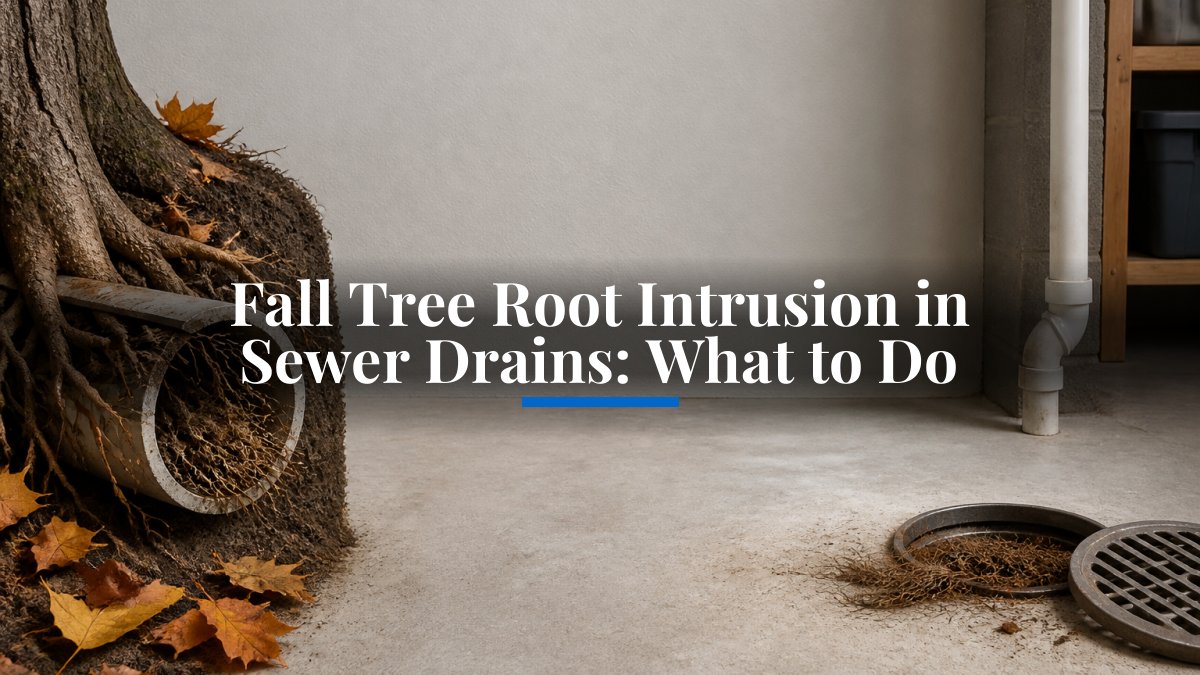
Fall Tree Root Intrusion in Sewer Drains: What to Do
Table of Contents
- Why Fall Tree Root Intrusion in Sewer Drains Spikes
- Basement Floor Drain Backing Up: The First Sign of Root Trouble
- How a Sewer Line Camera Inspection Confirms Root Intrusion
- How to Remove Roots from Sewer Pipes
- Prevent Tree Roots in Sewer Lines Before Next Fall
- When to Call a Professional for Fall Root Intrusion
- Frequently Asked Questions
Last Updated: October 21, 2026
Why Fall Tree Root Intrusion in Sewer Drains Spikes
Fall tree root intrusion in sewer drains happens because roots grow more aggressively this time of year. Trees sense winter coming and push out new roots to store water while they still can. Your sewer line is the easiest water source they'll find.
This guide from Affordable Drain covers why fall is the danger window and how to protect your line. We're a family-owned business serving Canton, OH since 1999, so we've seen this pattern play out in Stark County yards for over 25 years.
Here's the part most homeowners miss: roots don't need a crack to get in. A hairline joint is enough. Once inside, they feed on warm water and nutrients, and they thicken every season.
Basement Floor Drain Backing Up: The First Sign of Root Trouble
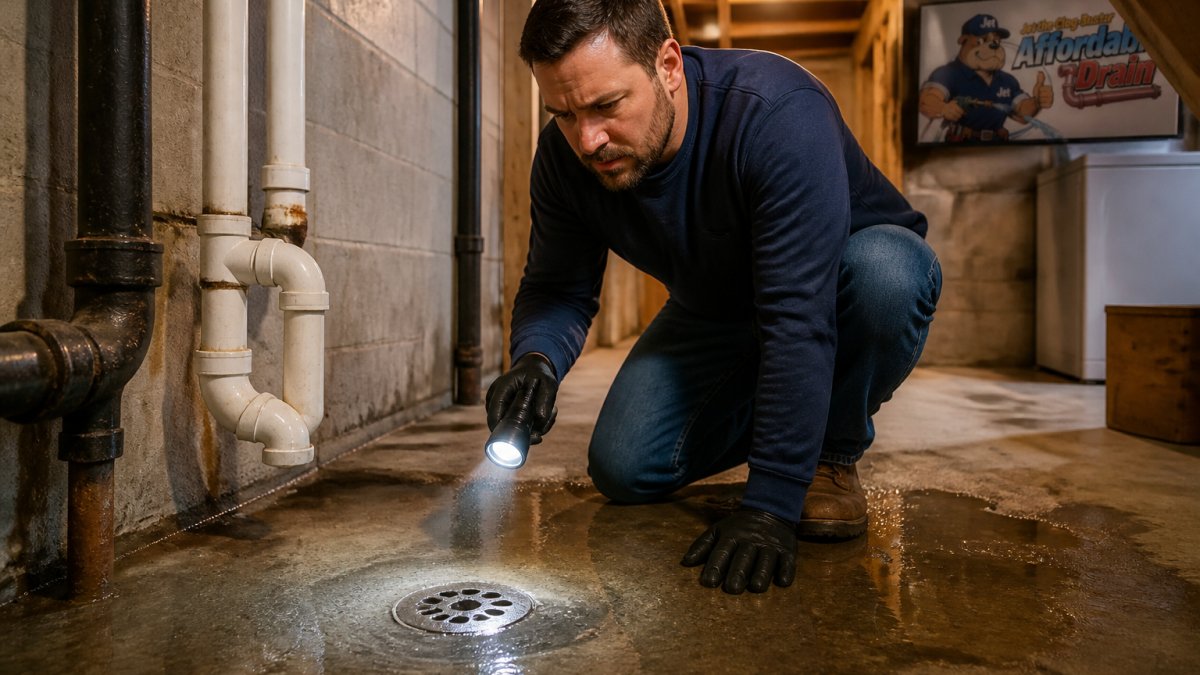
A basement floor drain backing up is often the first visible sign of a root problem. When roots block the main line, wastewater has nowhere to go but up through the lowest point in your basement.
Watch for these early clues:
- Water pooling around the floor drain after laundry or showers
- Gurgling sounds from drains when you run the sink
- A sewer smell that won't clear
- Slow drainage in multiple fixtures at once
Multiple slow fixtures point to the main line, not a single clog. That's your cue to act.
How a Sewer Line Camera Inspection Confirms Root Intrusion
A sewer line camera inspection is the only way to see what's actually inside your pipe. A small camera travels the line and shows roots, cracks, and blockages on a screen in real time.
Why this matters: guessing wastes money. We've pulled roots from lines that also had a collapsed section, and fixing only the roots would have meant a repeat visit within months.
The U.S. Environmental Protection Agency's guide to household sewer systems notes that private sewer lines are the homeowner's responsibility, which makes early inspection worth the effort.
What a camera inspection tells you:
- Where roots have entered and how dense they are
- Whether the pipe is cracked, offset, or collapsed
- The pipe material and its general condition
- Whether hydro jetting will clear it or a repair is needed
If you want a second opinion after the inspection, get one. A camera inspection is information, not a commitment.
How to Remove Roots from Sewer Pipes
Knowing how to remove roots from sewer pipes starts with understanding that not every method works. Store-bought chemicals rarely fix a root problem. They kill some growth, but roots grow back, and the chemicals can damage older pipes.
The methods that actually work:
- Mechanical augering cuts through roots but leaves them to regrow
- Hydro jetting uses high-pressure water to scour roots and debris from the pipe walls
- Root cutting with a specialized blade clears heavy growth
- Pipe repair or lining fixes the entry point so roots stay out
Hydro jetting is the most thorough option for most residential lines. It clears roots and the grease and scale roots cling to, which is why clogs return less often afterward.
Prevent Tree Roots in Sewer Lines Before Next Fall
To prevent tree roots in sewer lines, you have to think in seasons, not single visits. Fall is when roots push hardest, so late summer is the time to act.
A simple yearly routine:
- Schedule a camera inspection in late summer or early fall
- Keep a map of where your sewer line runs in the yard
- Avoid planting trees or large shrubs within several feet of the line
- Watch for slow drains in September and October
- Book hydro jetting if roots were found the year before
The U.S. Department of Agriculture's advice on managing tree roots near utilities recommends keeping woody plants well away from buried lines. That distance is your cheapest defense.
| Warning Sign | Likely Cause | What to Do |
|---|---|---|
| One slow drain | Local clog | Try a plunger or snake |
| Several slow drains | Main line blockage | Book a camera inspection |
| Floor drain backup | Root intrusion or collapse | Stop using water, call a pro |
| Sewer smell | Blocked vent or line | Inspect the line |
| Repeat clogs yearly | Roots regrowing | Consider repair or lining |
When to Call a Professional for Fall Root Intrusion
Call a professional when more than one fixture drains slowly, when your basement floor drain backs up, or when clogs return within a few months. Those are main-line symptoms, and they don't fix themselves.
Honest answer on cost: pricing depends on the line's length, condition, and access, so we quote after we see the job. We offer a free estimate, and we'll tell you if a repair isn't needed yet.
Our Canton customers often ask whether we'll oversell them. We won't. If a camera shows a clear line, we say so. That's how a family-owned shop lasts since 1999.
If you're searching for drain service near me in Canton or the surrounding Stark County area, call Affordable Drain today to schedule a free estimate.
Frequently Asked Questions
Can tree roots grow into sewer pipes in the fall?
Yes. Fall is when tree roots grow more vigorously as they search for water before winter, and the warm, moist air escaping from cracks in a sewer line draws them in. Once a root finds a tiny opening at a joint or crack, it expands and can block the pipe within a season. If you notice slow drains or a basement floor drain backing up in autumn, root intrusion is a likely cause.
What are the signs of tree roots in a sewer line?
Common signs include gurgling toilets, sinks that drain slowly across the whole house, a basement floor drain backing up, sewage odors, and repeated clogs in the same spot. You may also see sunken patches in the yard above the sewer line. A sewer line camera inspection is the only way to confirm roots inside the pipe and see how much of the line is affected.
Will cutting roots out of a sewer pipe fix the problem permanently?
Cutting roots restores flow, but it does not fix the crack or joint the roots entered through. Roots often grow back within a year or two, especially near fast-growing trees. A lasting fix means removing the roots with hydro jetting or a rooter, then repairing or lining the damaged section. Preventive treatments and regular inspections help keep roots from returning.
How can I help prevent tree roots from entering my sewer line?
Plant trees at least 10 feet from the sewer line, and avoid willows, maples, and poplars near the pipe. Have your line inspected every one to two years, especially in fall, and fix small cracks before roots find them. Never pour grease or flush wipes, which combine with roots to cause fast clogs. If roots are a recurring problem, ask about root-killing treatments or a pipe liner.
Fall roots are already moving toward your line, and the first sign is usually water where it shouldn't be. Affordable Drain brings 25+ years of local experience, camera inspections, and hydro jetting to find the real cause and clear it. As a family-owned, non-franchise business, we give you a straight answer and a free estimate. Call Affordable Drain today and get your line checked before winter sets in.