 how-to
Signs of Sewer Line Damage: What to Watch For
Table of Contents
- Understanding Sewer Line Damage and Why It Matters
- Broken Sewer Line Symptoms Inside Your Home
- Tree Roots in Sewer Line: A Common Culprit
- Sewer Line Leak in Yard: Outdoor Warning Signs
- How Sewer Camera Inspection Reveals Hidden Damage
- What to Do When You Spot Signs of Sewer Line Damage
- Frequently Asked Questions
Last Updated: October 18, 2026
Understanding Sewer Line Damage and Why It Matters
A damaged sewer line is one of the most serious plumbing problems a homeowner can face. When your home's main sewer line fails, it stops carrying waste away from your property. The result is backed-up sewage, foundation damage, and expensive repairs that can cost thousands of dollars.
At Affordable Drain, we've diagnosed many sewer line problems across the Canton area over our 25+ years in business. What we've learned is this: catching sewer line damage early saves you money and prevents major headaches. Most homeowners don't realize they have a problem until sewage backs up into their home or their yard becomes a swamp.
The good news is that sewer line damage sends clear warning signals. You just need to know what to look for. Below, we'll walk you through the most common signs of sewer line damage, explain what causes them, and show you exactly what to do if you spot one.
Broken Sewer Line Symptoms Inside Your Home
Your home's plumbing system is connected to a single main sewer line that carries all waste away. When that line breaks or clogs, the backup happens inside first. Inside your home, broken sewer line symptoms are unmistakable once you know what to watch for.
Multiple Drains Backing Up at Once
The clearest sign of sewer line damage is multiple drains backing up simultaneously. This doesn't mean one toilet overflows. It means your kitchen sink, bathroom sinks, shower, and toilet all back up at the same time or within hours of each other.
Why does this happen? When the main sewer line is blocked or broken, waste has nowhere to go. It backs up into every drain connected to that line. If only one drain is slow, you likely have a local clog in that drain line. But when everything backs up together, the problem is downstream in your main sewer line.
Pay attention to which fixtures back up first. Usually, the lowest drains in your home (basement bathrooms, ground-floor toilets) show the problem first. This is because gravity pulls waste downward, and the blockage stops it from flowing out.
Persistent Sewage Odors
A foul sewage smell inside your home is your nose telling you something is wrong. Healthy sewer lines carry waste away completely. You shouldn't smell anything.
If you smell raw sewage in your bathroom, kitchen, or basement, your sewer line has a problem. The smell means gases are escaping from the sewer line into your home instead of venting safely through your roof vent.
Sewage odors can come from:
- A cracked or broken sewer line letting gases escape
- A clogged line causing backups and gas buildup
- Tree roots breaking into the line and creating gaps
- Deteriorated pipe joints that no longer seal properly
The smell is strongest near the lowest point in your home, often the basement or ground floor. If the odor is only in one bathroom, it might be a local plumbing issue. But if it's throughout your home, your main sewer line is likely damaged.
Slow Drains Throughout the House
Slow drains are annoying, but they're also a warning sign. If multiple drains in your home are draining slowly at the same time, your sewer line may be partially blocked.
Partial blockages don't cause immediate backups. Instead, water drains slowly as it fights through the obstruction. You might notice:
- Your shower takes forever to drain
- The toilet doesn't flush completely on the first try
- Sinks gurgle or make strange noises when draining
- Drains back up briefly after heavy use
These symptoms get worse over time. A partial blockage today becomes a complete blockage tomorrow. The longer you wait, the more debris accumulates and the worse the problem becomes.
Tree Roots in Sewer Line: A Common Culprit
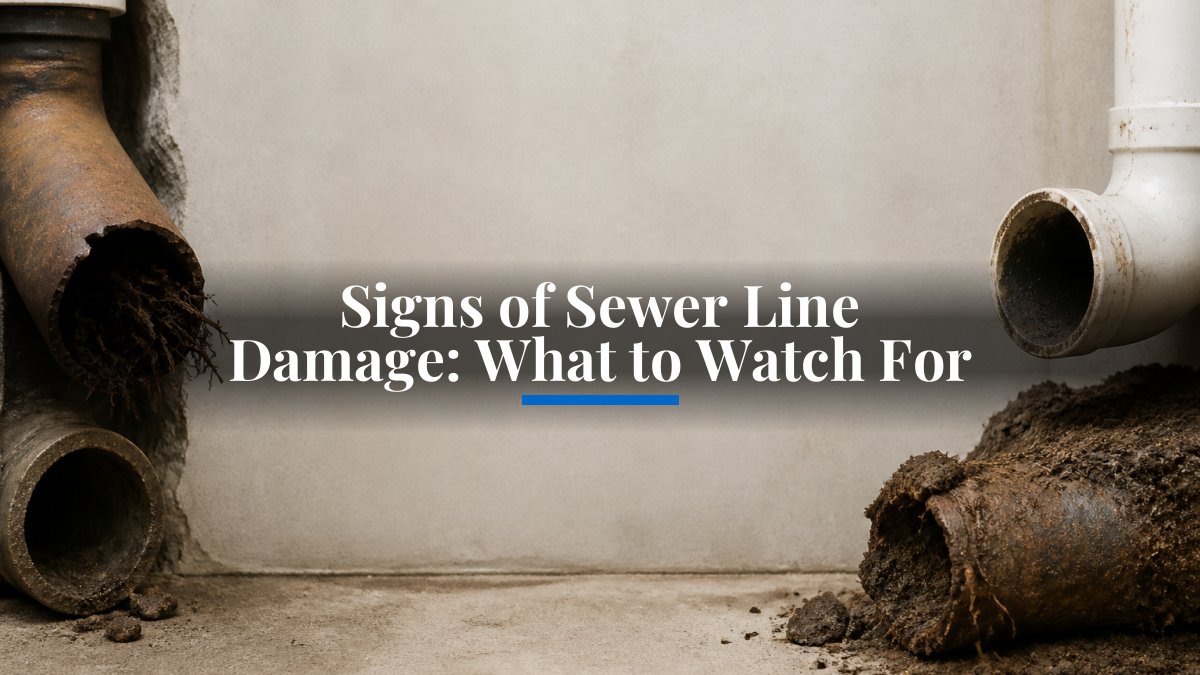
Tree roots in sewer line problems are one of the most common reasons we get emergency calls in Canton. Tree roots are attracted to the moisture and nutrients in your sewer line. They grow toward the pipe, find small cracks or loose joints, and force their way inside.
Once inside, roots grow and spread. They trap debris, slow water flow, and eventually block the line completely. Over time, the roots can crack the pipe from the inside out, causing major structural damage.
How do you know if tree roots are the problem? The signs are specific. You'll notice:
- Slow drains that gradually get worse (not sudden backups)
- Backups that happen during spring and fall when roots grow fastest
- Sewage odors outside near large trees
- Patches of unusually green grass in your yard (fertilized by leaking sewage)
The trees most likely to cause problems are willows, poplars, maples, and oaks. If you have large trees near your sewer line, you're at higher risk. Roots can grow 20 to 30 feet from a tree to find water sources.
The fix for tree roots in sewer line issues isn't as simple as pulling them out. Roots regrow quickly. Professional solutions include hydro jetting to clear roots and debris, or camera inspection to assess the damage and plan repairs.
Sewer Line Leak in Yard: Outdoor Warning Signs
Sewer line damage doesn't always announce itself inside your home. Sometimes the first signs appear outside. A sewer line leak in yard areas creates distinctive patterns that homeowners often overlook.
Soggy Patches and Pooling Water
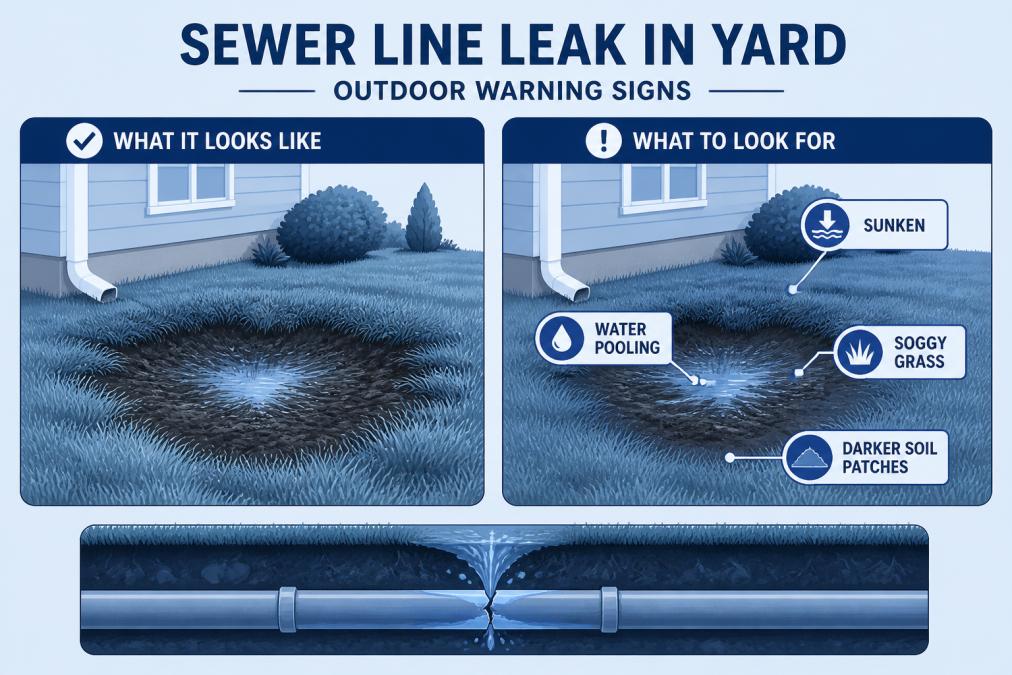
Walk around your yard and look for wet spots, especially during dry weather. A sewer line leak in yard creates soggy patches because sewage and water are seeping into the soil around the broken pipe.
These wet areas appear:
- Over or near where your main sewer line runs (usually from your home toward the street)
- Even when it hasn't rained recently
- In the same spots consistently, not just after storms
Pooling water in your yard is a red flag. Your yard should drain naturally. Pools of water that don't go away point to a leak underground. When sewage leaks from your sewer line, it saturates the soil and prevents normal drainage.
Unusually Green or Lush Grass
This sign seems positive at first, but it's actually a warning. Grass that's greener and thicker than the rest of your lawn, growing directly over your sewer line, is being fertilized by sewage. Sewage contains nutrients that grass loves.
Look for:
- A strip of extra-green grass running from your home toward the street
- Grass that grows faster and thicker in one area
- Patches that stay green even during dry spells when the rest of your lawn browns
This pattern shows that sewage is leaking into the soil. The grass is thriving on free fertilizer. While it looks nice, it's a serious problem underground.
Pest and Rodent Activity
Rodents and insects are attracted to sewage. If you notice more rats, mice, or insects than usual in your yard or basement, a sewer line leak might be the reason.
Rodents follow sewer lines to find food and water. When a line cracks or breaks, they can access the sewage more easily. You might see:
- Rodent droppings in your basement or crawl space
- More insects, especially flies and mosquitoes
- Strange smells that attract pests
- Holes in your yard that look like rodent burrows
These pests don't just annoy you. They carry disease and can damage your home further. A sewer line leak that attracts rodents needs professional attention quickly.
How Sewer Camera Inspection Reveals Hidden Damage
You can see some signs of sewer line damage with your own eyes. But the most accurate way to diagnose the problem is with a sewer camera inspection. This technology lets professionals see exactly what's happening inside your pipe without digging up your yard.
A sewer camera inspection involves inserting a small, waterproof camera into your sewer line through a cleanout or drain opening. The camera travels through the pipe and sends video back to a monitor. The technician watches in real time and records everything.
What a camera shows:
- Cracks and breaks in the pipe
- Tree roots growing inside
- Debris and blockages
- Corrosion and deterioration
- Pipe collapse or sagging sections
- Misaligned joints where pipes connect
The camera reveals damage that surface signs can't show. A small crack today might become a major break tomorrow. Seeing it on camera helps you plan repairs before the problem gets worse.
At Affordable Drain, we use sewer camera inspection to give you a clear picture of your sewer line's condition. You see exactly what's wrong and understand why repairs are needed. No guessing. No unnecessary work. Just honest diagnosis and a clear plan forward.
What to Do When You Spot Signs of Sewer Line Damage
If you've noticed one or more of these signs, here's what to do next:
Step 1: Stop the Guessing Don't assume the problem is a simple clog. Don't try DIY fixes that might make it worse. Call a professional who can diagnose the real issue.
Step 2: Get a Camera Inspection A sewer camera inspection is the fastest, cheapest way to know what you're dealing with. It shows exactly where the damage is and how serious it is.
Step 3: Understand Your Options Once you know the problem, you have choices:
- Hydro jetting clears blockages and roots without digging
- Pipe repair or replacement fixes structural damage
- Preventative maintenance stops future problems
Step 4: Act Quickly Sewer line damage gets worse over time. A small crack becomes a big break. A partial blockage becomes a complete backup. The sooner you fix it, the less it costs and the less damage occurs.
Step 5: Trust a Local Professional Choose a local, experienced company that treats your home like their own. At Affordable Drain, we've been serving Canton and the surrounding areas for over 25 years.
Sewer line damage is serious, but it's not invisible. The signs are there if you know what to look for. Multiple drains backing up, sewage odors, slow drains, soggy yards, and unusual pest activity all point to a damaged sewer line.
Frequently Asked Questions
What are the most common signs of sewer line damage?
The most common signs include multiple drains backing up simultaneously, persistent sewage odors inside or outside your home, slow drains throughout the house, soggy patches in the yard, unusually lush grass growth over the sewer line, and pest infestations. If you notice any combination of these symptoms, a professional sewer camera inspection can confirm whether your sewer line is damaged or clogged.
Can tree roots damage a sewer line?
Yes, tree roots are one of the leading causes of sewer line damage. Roots are attracted to the moisture and nutrients in sewer lines and can penetrate cracks or joints. Once inside, they grow and expand, eventually blocking flow or fracturing the pipe. If you have large trees near your home, regular camera inspections help catch root intrusion early before it causes major damage.
How do I know if there's a sewer line leak in my yard?
Signs of a sewer line leak include soggy or unusually wet patches of grass that don't dry out, areas where grass is greener or grows faster than the rest of your lawn, visible indentations or sunken spots in the soil, and increased pest or rodent activity near the yard. You may also notice a foul odor coming from the ground. A camera inspection can pinpoint the exact location and severity of the leak.
What does a sewer camera inspection involve?
A sewer camera inspection uses a waterproof camera attached to a flexible cable that's inserted into your sewer line. The technician guides it through the pipe while viewing real-time footage on a monitor, identifying cracks, breaks, blockages, tree root intrusion, and other damage. This non-invasive diagnostic tool shows exactly what's wrong so you know what repairs are needed before any work begins.